
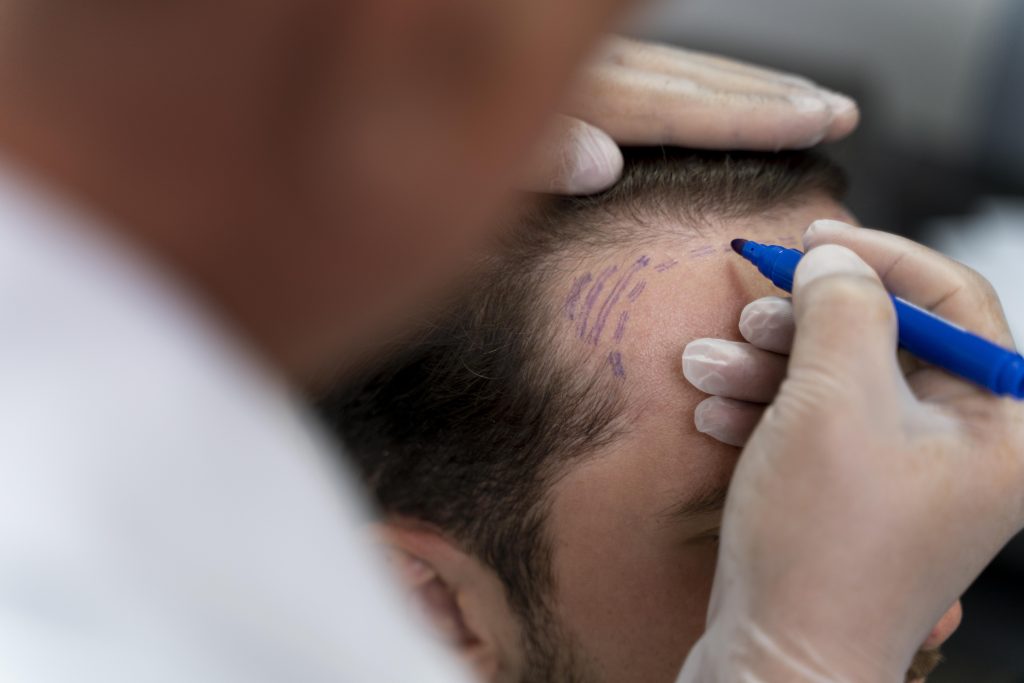
Does Hair Transplant Leave Scars?
One of the most common questions among people considering hair transplantation is whether there will be a visible scar after the procedure. This concern becomes even more important for men who prefer to keep their hair short or for individuals with lower hair density.
Thanks to the development of modern hair transplant techniques, much more natural and aesthetically comfortable results can be achieved compared to older methods. However, the final scar appearance depends on several factors, including the technique used, surgical planning, the condition of the donor area, the patient’s skin structure, and the post-procedure care process.
Is Scarring After Hair Transplant Normal?
Hair transplantation is a surgical procedure. Therefore, a certain level of tissue healing is a natural part of the process. However, the goal of modern hair transplant techniques is to keep post-procedure scar visibility as minimal as possible.
Especially in techniques where grafts are extracted one by one from the nape area using a micro motor or similar methods, scarring is generally much less noticeable compared to the traditional strip method. These small marks usually become unnoticeable from the outside as the hair grows.
The critical point here is not to extract more grafts than necessary from the donor area and to perform the extraction in a homogeneous manner. Otherwise, thinning in the nape area, an irregular appearance, or more visible dotted scars may occur.
Which Hair Transplant Techniques Leave Less Scarring?
One of the most important factors affecting scar visibility in hair transplantation is the technique used. In modern techniques commonly preferred today, grafts are extracted individually and implanted into the balding area at a natural angle.
In the FUE technique, hair follicles are removed one by one from the donor area, so there is no large or linear incision scar. Therefore, once the healing process is complete, scars usually remain as tiny dotted areas and are not noticeable among the hair.
In the older FUT technique, a strip of tissue is removed from the nape area, which increases the possibility of a linear scar. For this reason, modern techniques that aim to reduce scar visibility are more commonly preferred today, especially in patients with high aesthetic expectations.
Does the Donor Area Scar After Hair Transplant?
The donor area is the region from which hair follicles are taken, and it is most commonly the nape area. After the procedure, redness, crusting, and sensitivity may be observed in this area. These are generally natural parts of the healing process.
In the first weeks, small crusts may form in the donor area. As the crusts fall off, the skin surface begins to recover. As the hair grows, the visibility of this area decreases. However, when the hair is cut very short, small marks may be noticeable, especially in individuals whose skin is prone to scarring.
For this reason, hair transplant planning should not focus only on the recipient area. The healthy preservation of the donor area should also be evaluated strategically.
Factors That Affect Scar Visibility After Hair Transplant
Scar formation after hair transplantation may vary from person to person. Each patient’s skin structure, healing capacity, and hair density are different. Therefore, a detailed pre-procedure evaluation is necessary.
The main factors affecting scar appearance include:
- The hair transplant technique used
- The number of grafts extracted from the donor area
- Whether grafts are extracted with homogeneous distribution
- The wound-healing quality of the skin
- The patient’s tendency toward keloid or hypertrophic scarring
- Compliance with post-procedure care instructions
- Whether infection or trauma develops
- How short the patient keeps their hair
Especially in the early post-procedure period, forcibly removing crusts, scratching the area, exposing it to trauma, or neglecting hygiene rules may negatively affect the quality of healing.
What Should Be Considered to Minimize Scarring After Hair Transplant?
To reduce scar visibility after hair transplantation, both surgical planning and patient compliance are highly important. The procedure should be planned by an experienced team according to the patient’s hair structure and donor capacity.
After the procedure, the washing, care, and follow-up processes recommended by the doctor should be followed carefully. During the crusting period, the area should be treated gently, crusts should not be picked by hand, and the recommended care protocol should not be interrupted.
In addition, avoiding intense sun exposure, swimming pools, the sea, heavy exercise, and applications that may irritate the scalp during the first weeks supports the healing process.
Do Hair Transplant Scars Completely Disappear?
After hair transplantation performed with modern techniques, scars are usually mild enough not to be noticeable from the outside. However, saying that “there will be no scar at all” is not medically accurate. Any surgical intervention on the skin may leave a healing mark, even at a microscopic level.
The main goal is to ensure that scars remain at a level that is not visible among the hair, does not cause aesthetic discomfort, and does not disturb the natural appearance.
With the right technique, appropriate patient selection, protection of the donor area, and a healthy healing process, scar visibility after hair transplantation can be largely controlled.
Does Hair Transplant Look Natural?
In hair transplantation, natural appearance is just as important as scarring. The hairline must be planned according to the patient’s facial structure, the grafts must be placed at the correct angle, and the distribution must be compatible with the existing hair density.
An unnatural hairline, excessive density, or irregular implantation may negatively affect the aesthetic result even if there is no visible scar. Therefore, hair transplantation is not only a technical procedure but also a personalized treatment that requires aesthetic planning.
Conclusion: Does Hair Transplant Leave Scars?
The possibility of scarring after hair transplantation cannot be completely ruled out. However, with modern techniques and proper surgical planning, these scars are often at a level that is not noticeable from the outside. Careful use of the donor area, avoiding excessive graft extraction, and following the post-procedure care process play a decisive role in reducing scar visibility.
For individuals considering hair transplantation, the most accurate approach is to have their hair structure, donor area capacity, skin characteristics, and expectations evaluated in detail by a specialist physician before the procedure.
Barış Yiğit Clinic Contact Information
📞 Phone: +90 532 451 84 48
📍 Address: Tuzla, Sadi Pekin Cad. No:4B/2, Fethiye, MUĞLA / TÜRKİYE
✉️ Email: info@barisyigit.com
🌐 Website: https://barisyigit.com/
